

How Experts Can Show Credibility Online Without Feeling Salesy

Many professionals struggle with self-promotion. Whether you’re a lawyer, consultant, coach, accountant, advisor, or other service provider, talking about your accomplishments can sometimes feel uncomfortable. You want to attract clients and build trust, but you don’t want your online presence to come across as overly promotional or sales-focused.
The good news is that learning how to show credibility online doesn’t require aggressive marketing tactics. In fact, the most effective credibility-building strategies focus on helping, educating, and demonstrating expertise rather than constantly selling.
When done correctly, your online presence can naturally position you as a trusted authority while making potential clients feel confident about contacting you.
Why Credibility Matters Online
Before someone schedules a consultation or reaches out for information, they usually conduct their own research.
They may visit your:
- Website
- LinkedIn profile
- Google Business Profile
- Social media accounts
- Reviews and testimonials
During this process, they are trying to answer three important questions:
- Are you knowledgeable?
- Are you experienced?
- Can they trust you?
If your online presence doesn’t clearly answer those questions, potential clients may move on to someone else—even if you are highly qualified.
Credibility helps bridge the gap between a prospect discovering you and deciding to contact you.
How to Show Credibility Online
1. Share Useful Insights
One of the simplest ways to build credibility is by sharing helpful information.
Instead of focusing on your services, focus on your audience’s challenges and questions. Educational content allows people to experience your expertise before they ever speak with you.
You can share:
- Practical tips
- Industry updates
- Frequently asked questions
- Common misconceptions
- Step-by-step guides
- Professional insights
For example, a lawyer might explain common legal mistakes business owners make. A consultant might share productivity strategies. An accountant could provide tax planning tips.
When people consistently learn something valuable from your content, they begin to view you as a trusted resource.
2. Show Proof of Your Work
Many professionals make the mistake of telling people they are experienced instead of showing evidence.
Proof builds trust far more effectively than claims.
Consider including:
- Client testimonials
- Success stories
- Case studies
- Google reviews
- Professional recommendations
- Project outcomes
You don’t need to reveal confidential information. Even a simple explanation of a challenge you helped solve can demonstrate expertise and build confidence.
When prospects see evidence that you’ve successfully helped others, they feel more comfortable taking the next step.
3. Maintain Consistency Across Platforms
Consistency is a major credibility signal.
Potential clients often move between multiple platforms while researching a professional. If your website says one thing and your LinkedIn profile says another, it can create confusion.
Make sure your:
- Professional bio
- Services
- Headshots
- Contact information
- Messaging
- Branding
remain consistent across all platforms.
Your website and LinkedIn profile should support one another and communicate a clear professional identity.
Support your visibility using Google Business Profile and your website, allowing prospects to easily verify your business and learn more about your expertise.
Common Mistakes That Hurt Your Online Credibility
Many professionals unintentionally damage their credibility online.
Some of the most common mistakes include:
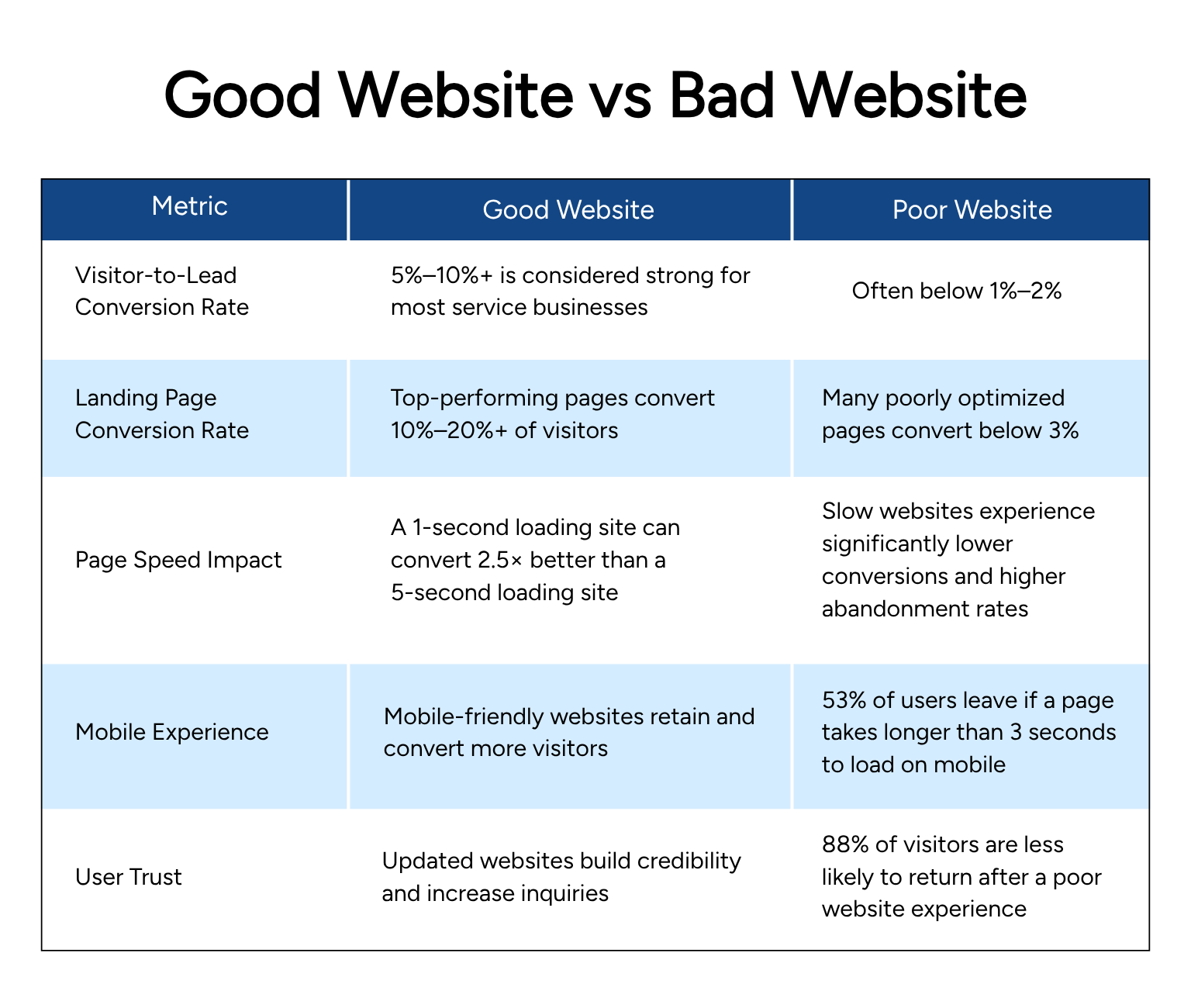
- Having an outdated website
- Using inconsistent branding
- Posting only promotional content
- Failing to update professional profiles
- Making claims without evidence
- Ignoring client reviews
- Having incomplete contact information
These issues may seem minor, but they can significantly impact how potential clients perceive your business.
Remember that people often form opinions quickly. If your online presence appears neglected or outdated, they may assume your services are as well.
Learning how to show credibility online often starts by eliminating these avoidable trust barriers.
4. Use Clear Messaging
Many professionals try to sound impressive by using complicated language.
Unfortunately, this often creates confusion.
Clear communication helps potential clients understand:
- What you do
- Who you help
- How you solve problems
- Why they should choose you
Visitors should be able to understand your value within seconds of landing on your website.
Simple, direct messaging often builds more trust than industry jargon or complex explanations.
Clarity demonstrates confidence.
5. Build a Strong Personal Brand
Your personal brand is the overall impression people have of you and your expertise.
A strong personal brand doesn’t require constant self-promotion. Instead, it focuses on presenting a clear and authentic professional identity.
A strong personal brand includes:
- Consistent visual identity
- Professional photography
- Clear messaging
- Valuable content
- Demonstrated expertise
- Authentic communication
Over time, these elements help people recognize and remember you.
For legal professionals, this is closely connected to how to build your brand as a lawyer, where credibility, expertise, and consistency work together to strengthen professional reputation.
Create Content That Demonstrates Expertise
One of the most effective long-term credibility strategies is content creation.
Every article, video, guide, or LinkedIn post serves as evidence of your knowledge.
Educational content helps:
- Build trust
- Improve visibility in search engines
- Answer client questions
- Showcase expertise
- Generate leads over time
Think about the questions clients ask most frequently. Each question can become a piece of content that helps both existing and future prospects.
Over time, this content library becomes a valuable credibility asset.
Highlight Your Professional Experience
Many professionals underestimate the value of sharing their experience.
Potential clients want reassurance that you understand their challenges and have helped others navigate similar situations.
Make sure your online presence highlights:
- Years of experience
- Professional certifications
- Industry specialization
- Published articles
- Speaking engagements
- Awards and recognition
- Professional memberships
These details provide additional context and help reinforce your credibility.
Use Social Proof to Build Confidence
Social proof remains one of the most powerful trust-building tools available.
People naturally feel more confident when they see others have had positive experiences.
Examples of social proof include:
- Testimonials
- Reviews
- Case studies
- Referrals
- Media features
- Industry recognition
Rather than telling prospects you’re trustworthy, social proof allows others to communicate that message on your behalf.
This often feels more authentic and persuasive.
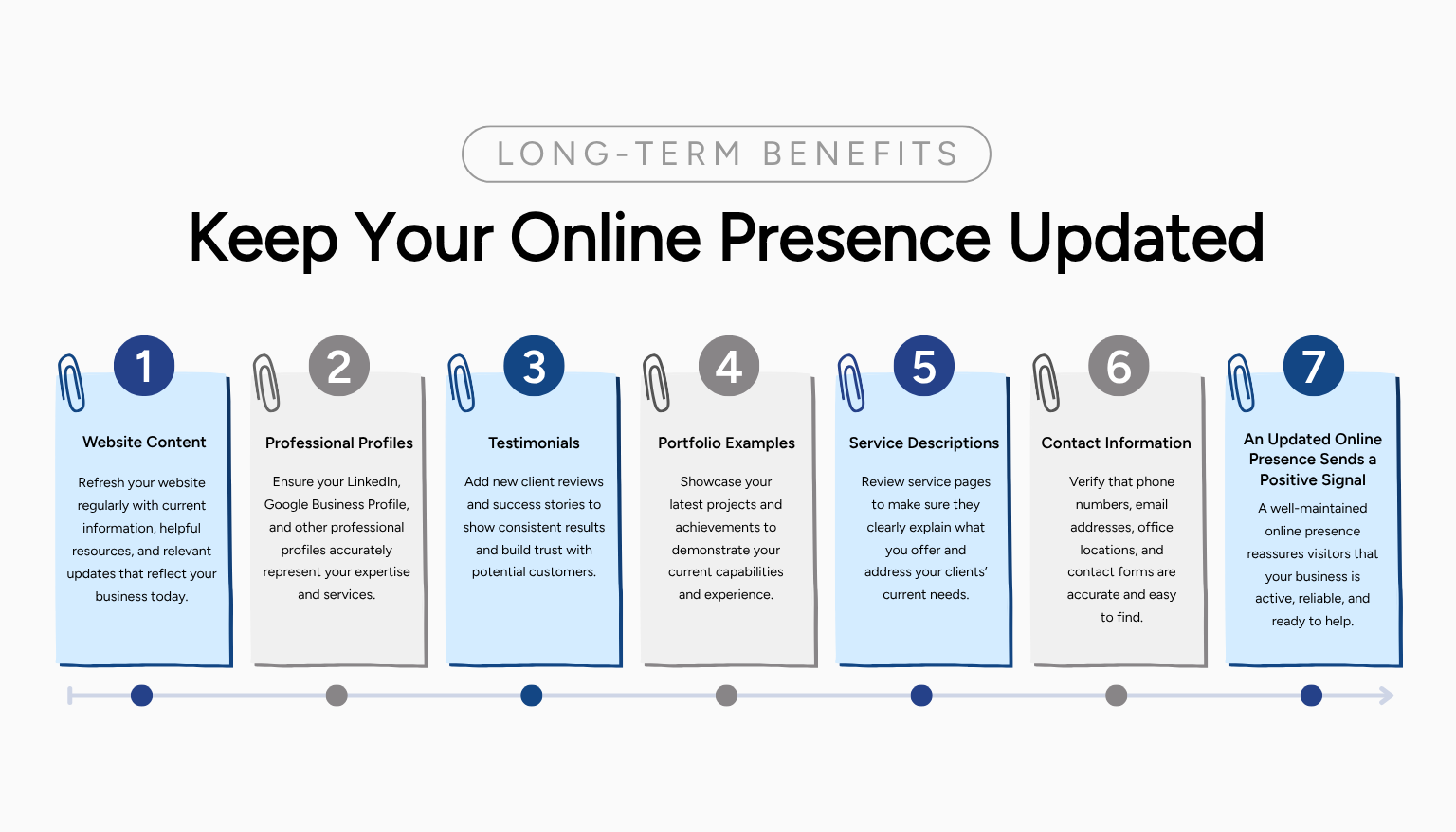
Keep Your Online Presence Updated
Credibility is not something you establish once and then forget.
Regular updates help demonstrate that your business is active and engaged.
Review and update your:
- Website content
- Professional profiles
- Testimonials
- Portfolio examples
- Service descriptions
- Contact information
An updated online presence sends a positive signal to both prospects and search engines.
The Long-Term Benefits of Building Credibility Online
Understanding how to show credibility online provides benefits far beyond attracting immediate inquiries.
Over time, a credible online presence can help you:
- Generate more referrals
- Increase website inquiries
- Attract higher-quality leads
- Improve search visibility
- Strengthen client trust
- Reduce price sensitivity
- Build long-term authority
The strongest professional brands are rarely built through aggressive promotion. Instead, they are built through consistent demonstrations of expertise, helpfulness, and reliability.
Learning how to show credibility online is not about becoming more sales-focused. It’s about making your expertise visible in a way that feels authentic and valuable.
By sharing useful insights, providing proof of your work, maintaining consistency, communicating clearly, and building a strong personal brand, you can establish trust without feeling like you’re constantly selling.
If you want to improve your credibility online, focus on clarity, consistency, and helpful content that reflects your expertise. When your online presence accurately represents the value you provide, potential clients can confidently choose to work with you—and your expertise will speak for itself.